
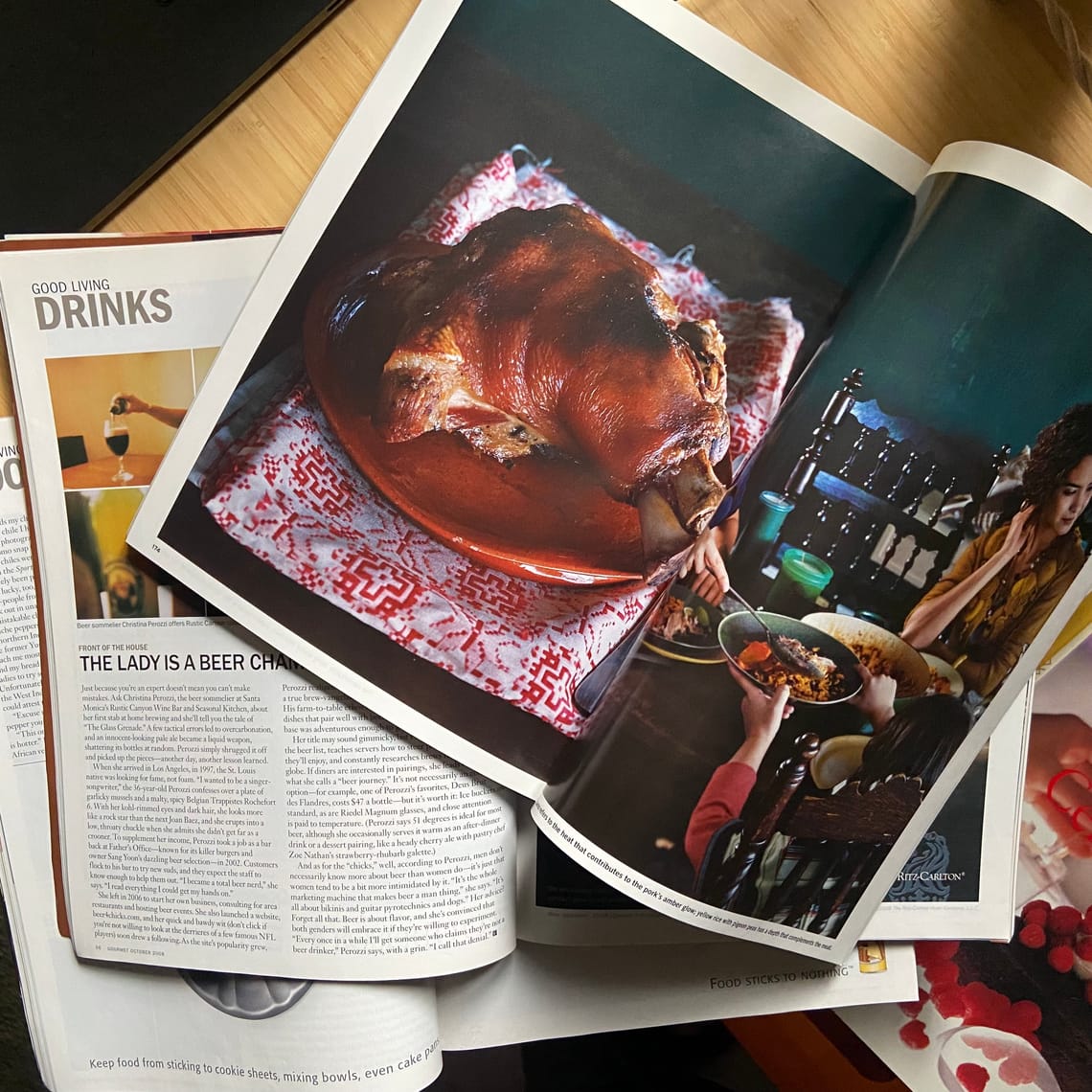
Gourmet is a sickness (I should know, I have it)
Issue No. 16 | The Gourmet Condition | Early Spring Advice
Early on in my tenure as the editor of Epicurious, somebody handed me the remnants of Gourmet. They were paper-clipped together, peppered with Post-It notes, and organized into bulging folders. There was some prose in there, but mostly the remnants were made up of recipes and menus. Things that would have appeared in future issues had Gourmet not been shuttered in 2009.
The folders were pushed onto me with relief. Over the course of five years, they had traveled from office to office, from 4 Times Square to One World Trade, and now I was the schmuck saddled with this Condé Nast baggage. I took them gladly; to me, they may as well have been the tablets straight from Moses’s hands. I had been irrationally obsessed with Gourmet since the summer I graduated college, when my boyfriend at the time would bring piles of magazines home from his job at Condé. One night he put a September issue of Gourmet in my hands. In it was a restaurant review of a Pennsylvania truck stop by Jane and Michael Stern.
I was working as a newsdesk assistant at a radio network at the time; my ambition was to become Susan Stamberg and talk about the news all day. But that issue of Gourmet, and in particular that review of the truck stop, did something to me. I read it, page by page, over and over again; wherever I went, I carried the issue with me. It became ratty and torn, like a disgusting baby blanket, and my boyfriend started to worry. When we met up for dinner after work, he’d dig into my messenger bag to see if the magazine was in there. He needn’t look; it always was. He’d lift it out with two fingers like it was damp trash. “What is wrong with you?” he’d say.
What was wrong with me was that I had decided to become a food writer. And it was entirely Gourmet’s fault.
For the next seven years I hustled to become a writer like the Sterns, or Gourmet's editor-in-chief Ruth Reichl. I took a gig writing 100-word synopses of restaurants, some of which required hours-long trips on the subway (rate: $15 each). I wrote trend stories and restaurant reviews and many profiles of Chicago chefs who, after they read the profiles, didn’t like me very much. When, out of what felt like nowhere, I received an email from an editor at Gourmet asking if I’d like to write a story about Chicago’s Mexican food scene, I forwarded that email to my boyfriend (a different one by now), then immediately called him from my desk at work. "It's happening!" I screamed, trying not to cry.
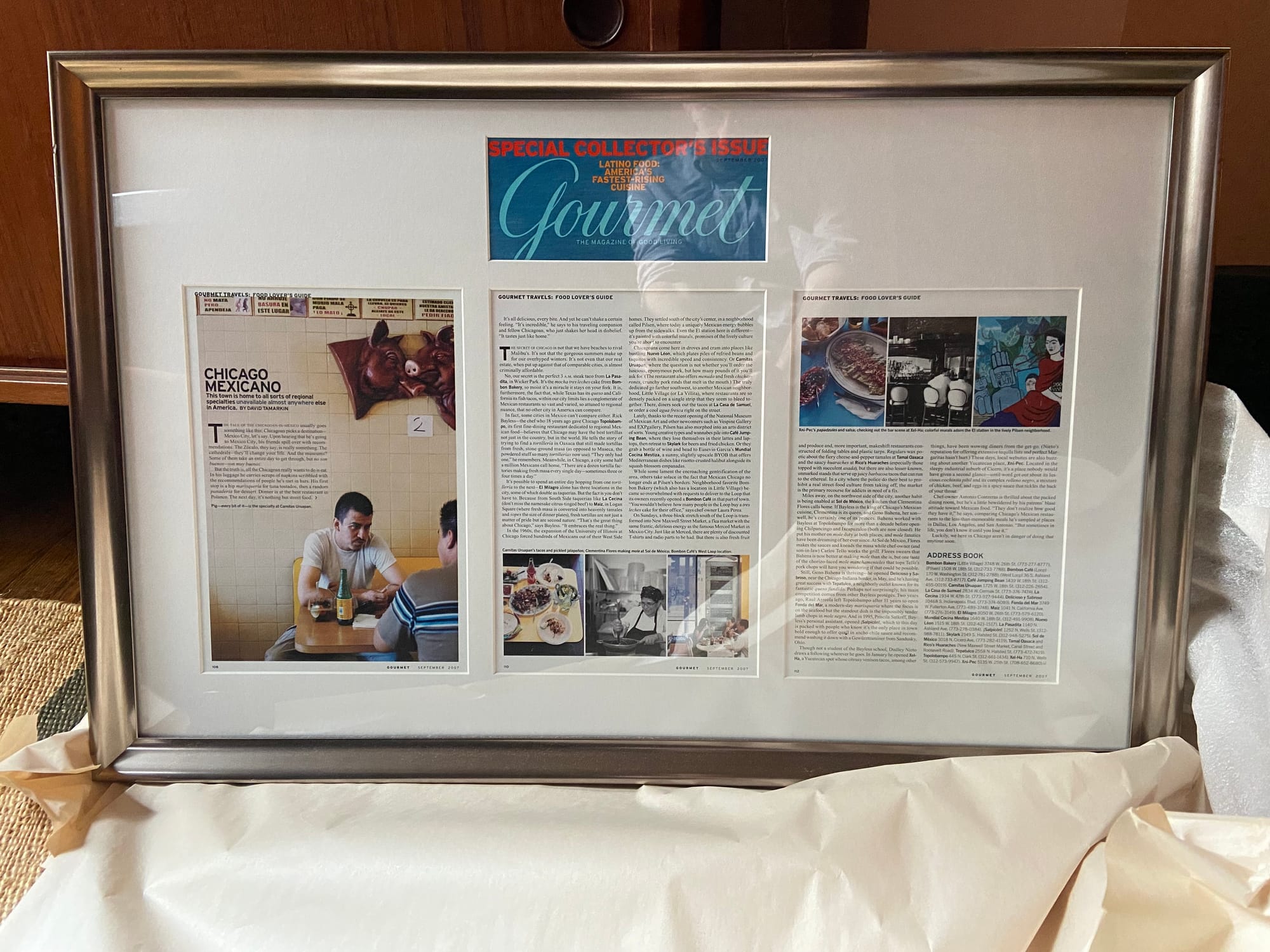
I worked on that article for probably 300 hours. When it was published, my boyfriend had it framed—a sweet gesture, even if I’ve always been too embarrassed to hang it. A week later, I had dinner at the home of a lawyer who was also a comedian and playwright. On the walls of her apartment she had painted, in a font so big it stretched across two corners, an inspirational quote: What would you do if you knew you would not fail? Under any other circumstance I would have spent the night silently judging this woman for turning her home into a Hallmark card, but that night I gazed at the quote earnestly. “My problem is that I just did that thing,” I said. She shot me an icy look. “You mean you can’t think of anything else?” she said. Which was a great point. But as long as Gourmet existed, I couldn’t.
I pitched the magazine obsessively after that, and wrote a few more articles for the print version before it died; I also wrote posts for their nascent website, for which I was a contributing editor reporting on Chicago. On the day the magazine closed, I felt I'd lost not just an outlet but the source of all my ambitions. So I booked my first session with my current therapist. When he asked why I'd sought out therapy, I listed two reasons: my relationship was a mess, and a very important magazine had closed.
Can all this really be true? Was I really so sickeningly obsessed? It’s hard to look back with clear eyes. People like me loved Gourmet when it was around, but we love it even more in hindsight. It’s easy to love a magazine that died in 2009. Magazines were still print-first then. Editors were not yet thinking about SEO and slideshows. At the city magazine I worked for, website traffic was actually hidden from the staff. The fact that Gourmet didn't devolve into listicles about chicken breast is probably a matter of timing, but people like me choose to believe otherwise—that it was the magazine's integrity that kept it from participating in online shenanigans.
It's a luxury that we never had to see Gourmet navigate the last 17 years of the internet. And yet we can't help wondering what it would look like now if it were still alive. At Epicurious we dreamed regularly of re-launching it. My boss came to me sometimes, talking big about reviving Gourmet as uber-premium, printed on thick paper, no ads, $40 per issue. Whether he took those ideas to his bosses, I don’t know, but obviously they never came to fruition. Instead, for most of my time at Condé, Gourmet existed only as a logo to slap on SIPs (Special Interest Publications), those insipid magazines that fill the racks at the checkout line at Whole Foods. But one year, after yet another round of budget cuts and layoffs, I remembered the remnants of Gourmet that were in my desk drawer. I pulled them out and extracted a fully-formed Christmas menu. We published it with reverence, seeking permission from Ruth and other former Gourmet editors, and we photographed it in what we hoped was Gourmet's style. It was cosplay. We were feeling nostalgic. Better that than go through the painful exercise of imagining what Gourmet would be had it endured.
The new Gourmet, which grabbed Gourmet's abandoned trademark and launched in January, takes a different tack. It has Gourmet's name, but seems to be figuring out how much distance it wants from Gourmet's history. In an interview with Fast Company, one of the new Gourmet's worker-owners, Alex Tatusian, summed up the complicated feelings: “You look at old Gourmet and ... it has such a classist energy. I think there’s something about that that we both want to celebrate ... but we also need to lightly lampoon." Was the self-described manifesto against "one-pan weeknight" cooking that the new Gourmet published an act of solidarity with the old Gourmet, or a push against it? It's hard to tell. I remember the old Gourmet as a magazine that leaned into long afternoons of cooking, but the truth is it had a "Quick Kitchen" section where they published 20-minute meals.
In subsequent issues, the new Gourmet seems more and more to be distinguishing itself from the magazine it took its name from. The old Gourmet was a major engine of chef worship (exemplified most famously by the October 2003 cover), but the new Gourmet is unafraid to poke at chefs (see their coverage of Clare de Boer's alleged contract with Bari Weiss). The old Gourmet was writerly and had an admirable mix of voices, but was always polite; the new Gourmet is gossipy and funny and sometimes so insider-y that I have no idea what they're talking about. The new Gourmet reminds me much more of heyday Eater than it does of Ruth Reichl's Gourmet, and yet the worker-owners of the new Gourmet seem to be at least a little infected with the same sickness I have. They look up to the old Gourmet, and aspire to be as brilliant. They have even already brought Ruth onto their pages by running a long interview with her. In it, worker-owner Amiel Stanek (the biggest mensch in food media) sweetly asks her: how are we doing?

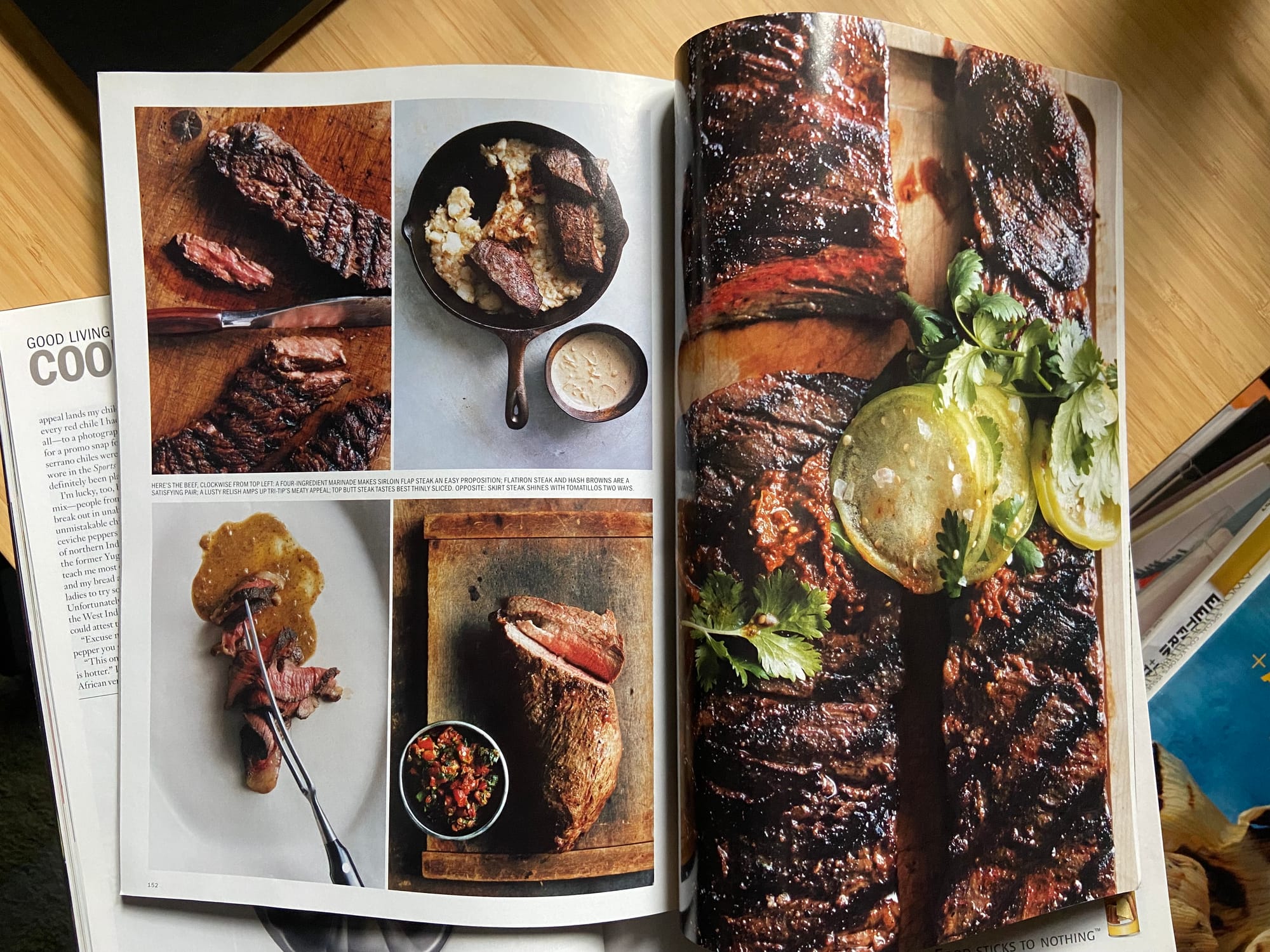
I have an uneasy relationship with enthusiasm. Rallying for sports teams (for any team, really) is anathema to me, and I walk away from conversations about Joan Didion—I can't stomach the unchecked adoration. Contrariness is a pillar of my personality (I don't necessarily recommend it), and when I was a (lifestyle) reporter, my default setting was skepticism. The fact that Gourmet falls through the cracks of all this nags at me. So the other day I dragged out my personal Gourmet archives. I was surprised and a little discomfited to find that I still have a stack of perfectly preserved issues, including, for some reason, an issue from December 1999, before I started reading it. I expected these magazines to be cold water, that they would shake me out of my rosy nostalgia and let me see Gourmet clearly for the first time. And at first that seemed to happen. The 1999 issue, before Gourmet had its final redesign, looks and reads dated, and as I flipped through it I felt no pull. But then I noticed that I'd been reading it for an hour. The same thing happened with the other issues. I was sucked into article after article—Junot Diaz on Dominican food, Ian Knauer on beekeeping—and I couldn't find a recipe I didn't want to make. I noticed Richard Feretti's design for what I think was the first time, really, and I spent many minutes staring at the photography, incredulous at how good they looked on this paper. This paper! I don't know anything about paper, but I rubbed the pages between my fingers, convinced it was the most luxurious paper in the world. I've been doing this for weeks now: flipping, gawking, re-reading the issues of Gourmet on my desk. Because there's something wrong with me. What is wrong with me? Gourmet magazine is dead! And I'm still sitting here sick about it.
Spring Advice
- Listen to Salt Pig. It's a new podcast about home cooking by Lukas Volger and Elinor Hutton. The horror story about Elinor's chicken stock that starts their second episode does not disappoint (I gasped).
- Listen to Things Bakers Know. The King Arthur podcast I host with Jessica Battilana is back for a third season. It's a good one!
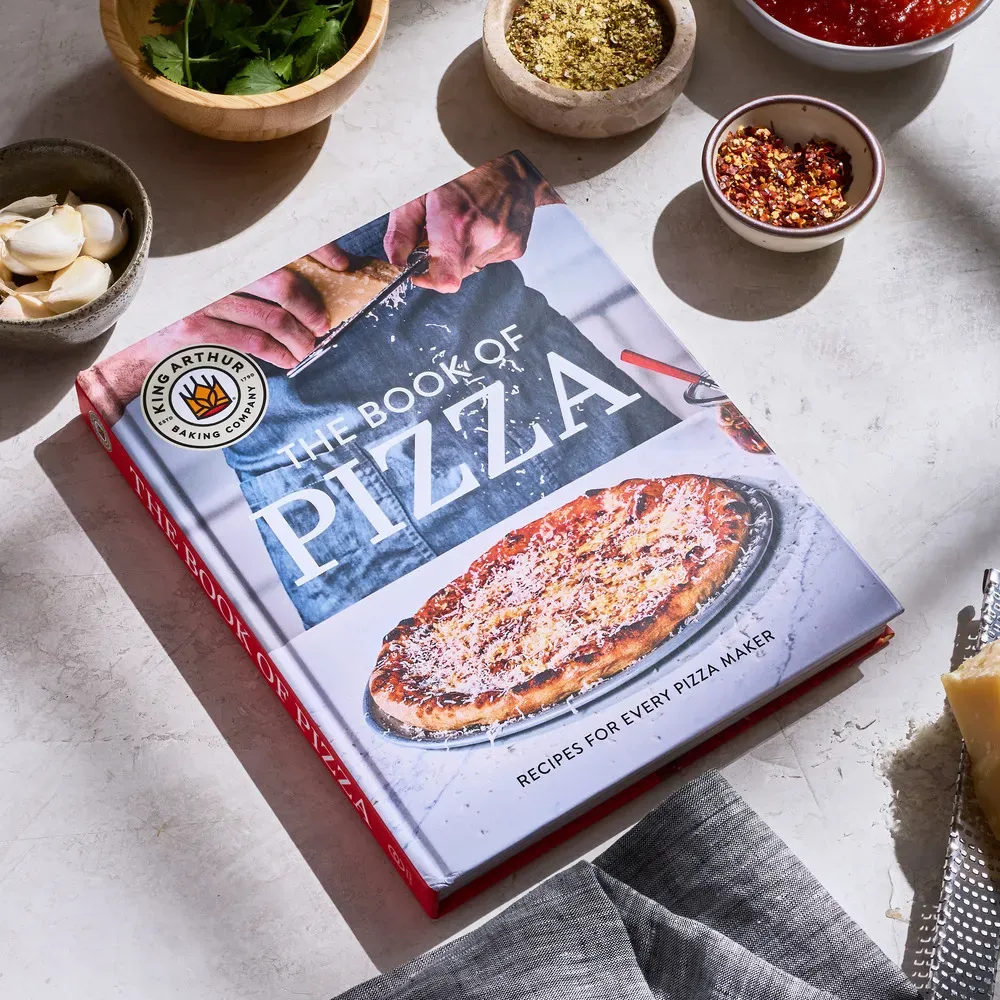
- Pre-order The Book of Pizza. Of the books I've worked on in my career, this one, which I wrote with a handful of very talented colleagues, is the one I am most proud of. It is the most gorgeous, most informative, most vital. Yes, vital! Pizza is a life force! Please pre-order it from an independent bookstore, preferably one that reports its sales to the New York Times, such as The Norwich Bookstore (where the copies are signed!), Joseph-Beth, McNally Jackson, or bookshop.org. Thank you. You are a gem.
- Email your professors. Last night I had dinner with my favorite professor from college, and was reminded how lucky I am to still have access to his opinions, recommendations, and editorial eye (he is the first to write back to these newsletters and alert me to my typos). Get in touch with your long-lost professors—they aren't done teaching you yet!
- Get The Butter Book by Anna Stockwell. Longtime readers of The Occasional Tamarkin may remember the very first issue, which was a profile of Anna and her incredible first book, For the Table. Anna's second book is small, cute, fun, and designed like a stick of butter, which is just kind of genius.
- Check out Gourmet. In case I wasn't completely clear above, I think the new Gourmet is worth your attention. They published a piece about a Chinese baker that I loved; more recently they published a charming profile of Brooks Headley as he prepared for a cross-country pop-up. They publish on Ghost (like T.O.T. [mostly]), are worked-owned, and they have Amiel, who I would follow anywhere. Subscribe for a month and see if you like it.
- Have a happy birthday. This one just goes out to my fellow Aries. I hear that 2026 is going to be our year. Finally, am I right??