
The Cucumber Crush
Issue No. 6 | Cucumber Crush | Recipe: Pepper Cukes | A Question for Amy Thielen | Cakes/Climate
I arrived late to cucumbers. But then, I arrived late to all fruits and vegetables. For my first twenty years I was that guy who inhaled chicken pot pies and ate entire sleeves of Chips Ahoy!, but would not touch a tomato, never ate a salad. My mother told me this was a phase. With side-eye, she said I'd one day become a health nut. "Kids like you always become adults like them," she said.
I am not exactly what my mother predicted. But it's true that at some point I fell hard for fruits and vegetables. Sometimes I quiz my boyfriend, also a vegetable lover, about his favorites, which is really just an excuse to list and rank mine. But it's hard to do. I love curly kale and yukon golds and beefsteak tomatoes equally.
But about cucumbers I've long felt neutral. I believed what is so often said about them—that they're "subtle" and "light"—and approached them assuming they would bore me. If I ate them, it's because they happened to be there, inserted into whatever sandwich or salad I had ordered. I picked at them mindlessly and crunched on them without malice, but also without joy.
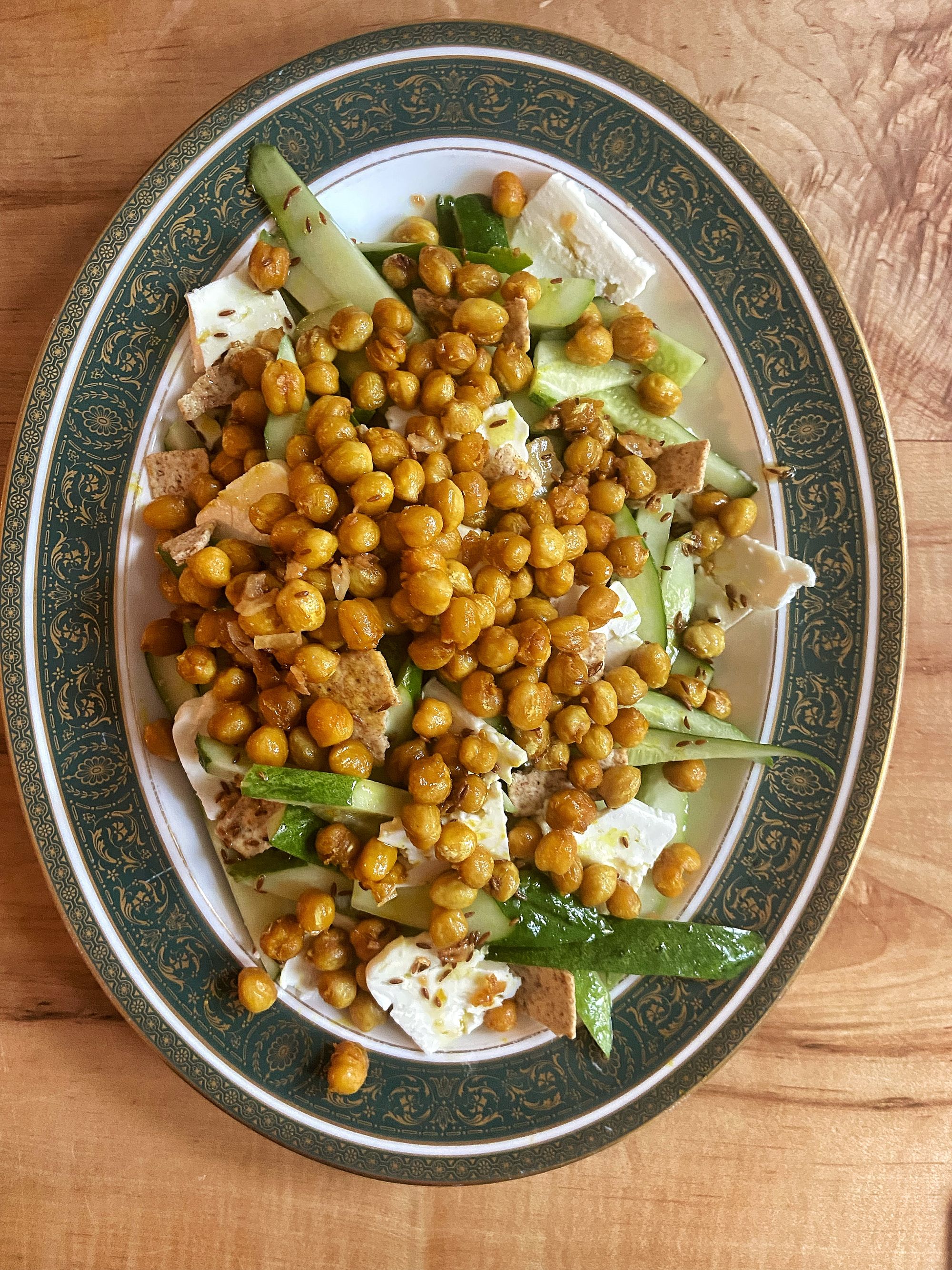
It took a Rachel Gurjar salad from the July '22 edition of Bon Appétit to shake me out of that. In that recipe the cucumbers are put up against big flavors: they are dressed in toasted garlic, lime juice, and cumin seeds, and nestled against blistered chickpeas and big slabs of feta. And yet among all that, the cucumbers took center stage. They were juicy, crunchy, sweet and melon-y. All my life I'd assumed cukes were quiet, but here they were, making themselves heard among a crowd of loudmouths.
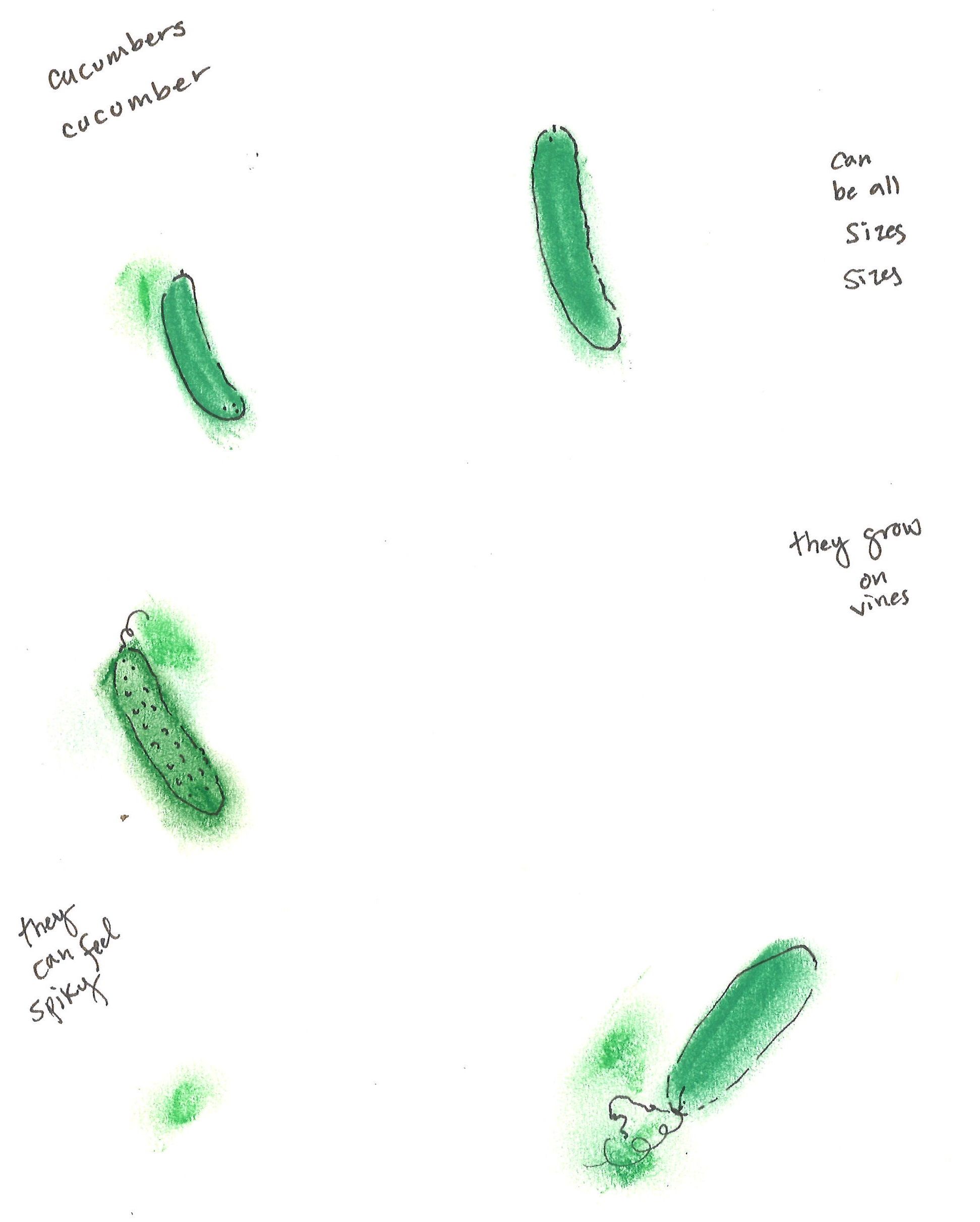
Now I have a crush on cucumbers. And as with all my crushes, I've spent hours digging up information on them. When I read that cucumbers (cucumis sativus) are part of the cucurbit family, making them close relatives of pumpkins, kabochas, butternuts, and all the other cucurbita moschata and maxima, I realized I don't just have a crush on cucumbers—I have a crush on their entire family. And yet these siblings seem so different to me. Cucumbers are quick and snappy; winter squash are slow and fleshy. Cucumbers are much more like their other siblings, the zucchini and summer squash and of course the melons. But even in that group cucumbers sit higher on the crunch axis.
I've been carrying piles of cucumbers out of the farmer's markets this summer; today they tumbled out of my arms and rolled on the sidewalk. I buy the smooth-skinned Persians and, when they're available, the cream-colored cucumbers that I think are called Boothby's Blonde. I also always grab some squat, bumpy Kirbys. In my reading I've seen some shade thrown on Kirbys: they're referred to as warty, thick-skinned, and merely picklers—obviously good for preserving but nothing you'd want to eat fresh. But I disagree with that. I'm with Steven Satterfield, who in his book Root to Leaf calls Kirbys his favorite cucumber. I love them for their looks, their ridges, their undulating color that goes from forest green all the way to chartreuse. I also think they're the crunchiest.
If the past few weeks are any indication, I'm going to slice some of the Kirbys I bought today and use them in cucumber sandwiches: just seedy and/or wheaty bread, a schmear of cream cheese or something like it, and thin, overlapping coins of salted cuke. I will not add onion, which is what Deborah Madison suggests in Vegetable Literacy (a great book for digging up info on your produce crushes); I did it once and the onion was a total bully, leaving no room for the honeydew sweetness of the cucumbers to shine through. (The crunch and the rush of cucumber juice still managed to be there, though. You can't shut a cucumber out completely.)
The rest of the cucumbers in my haul: I'm going to slice them very thinly and toss them with salt. Fifteen minutes later I'll squeeze them with my hands—the same way I treat potatoes when I make latkes—to get all the cucumber juice out. Unlike the dingy water that comes out of potatoes, this stuff will be light green and recklessly salty; I will mix it with seltzer and wish I had a little gin to add. To the cucumbers I'll add a tiny pinch of sugar, many glugs of distilled white vinegar, and severals grinds of black pepper. It'll be a bowl of the sharpest and fastest pickles on Earth, and I'll probably eat it with my fingers, right out of the mixing bowl.
That's what happened the first two times I made this recipe, anyway. It comes from Amy Thielen's cookbook Company, which comes out on August 29th and is absolutely worth a pre-order. In the headnote, Amy describes the Pepper Cukes as having a "painful tang." Which it does. It's what makes them so habit-forming, and a good companion to anything rich or heavy. So many foods call for a foil, something to cut through thick blankets of olive oil or cream. Sometimes—many times—the cucumber is the only vegetable up to the task.
Recipe: Addie's Pepper Cukes
From Amy Thielen's glorious new cookbook, Company, which you can pre-order here.
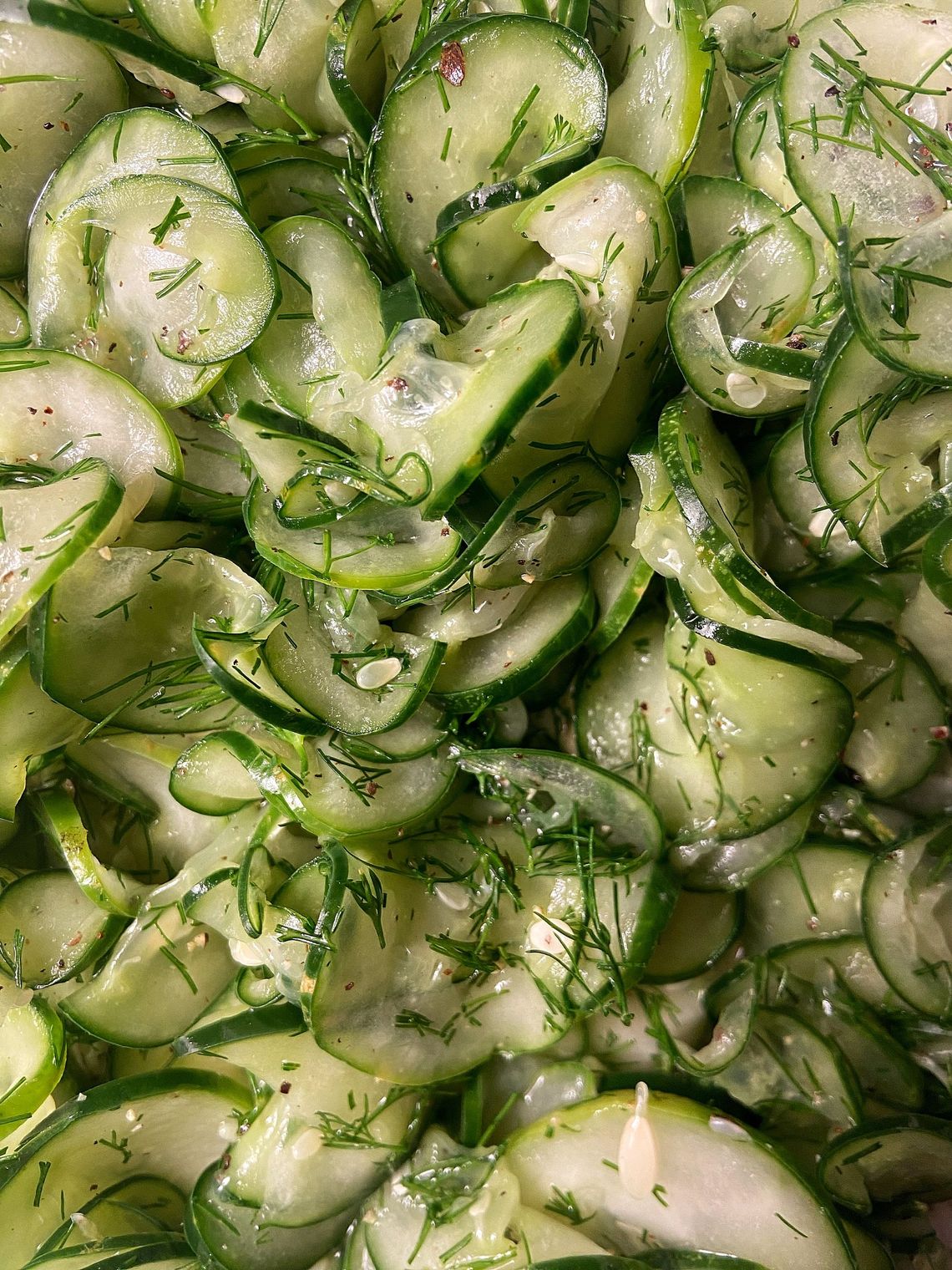
Note: Company is about cooking for others, and the recipes have big yields. This one makes 2½ cups (enough for 8 to 10 as a side/condiment), but I have halved it with excellent results. Also, as the photo at the top of this newsletter shows, I personally decline to peel the cucumbers, and it's still delicious.
6 medium knobby pickling or thin-skinned Persian cucumbers
¾ teaspoon fine sea salt, plus more to taste
½ teaspoon sugar
¾ teaspoon freshly ground black pepper
5 to 6 tablespoons distilled white vinegar
2 teaspoons finely chopped fresh dill fronds
Peel the cucumbers. Slice very thinly with a mandoline (or a sharp knife), transfer to a bowl, and mix with the salt, tossing with your hands. Let the cucumbers sit on the counter until they sweat their liquid, at least 15 minutes.
Drain and squeeze the cucumbers and then wring them out, as you might a delicate piece of handwashing: Do this over a bowl to catch the precious bright green cucumber water. You’ll need just a tablespoon for the salad, to smooth out the vinegar, but you can save the rest to add to cocktails (it’s great in a martini or a gin and tonic.)
Return the cucumbers to the bowl, add the sugar, black pepper, and 5 tablespoons vinegar, toss well, and give it a taste. The vinegar should already have a sharp presence but it will continue to penetrate the cukes, so the pickle may need that last tablespoon of vinegar in the end. Add the dill and 1 tablespoon of the reserved cucumber water and toss to combine. Hold the cucumbers at room temperature until you’re ready for them. You could make this in advance and refrigerate it, but it’s better when fresh.
THE OCCASIONAL QUESTION FOR...Amy Thielen
I remember the day in 2014 when I came across Amy Thielen's The New Midwestern Table in an Urban Outfitters in Chicago. I instantly felt seen by the book—I am an Ohio boy, remember—and bought it on the spot. At home, flipping through the pages, I found that I barely recognized Thielen's Midwest; her Great Plains food looked nothing like the Great Lakes stuff I grew up with. But I cooked from the book anyway and fell in love with Amy's recipes, as well as her writing (also: the book's endpapers). Amy's new cookbook, Company, is not necessarily about the Midwest—it's about cooking for groups of 6, 8, 12, and bigger—but the food and photos and philosophies in the book are very much rooted in the place she lives. It is a gorgeous book and while I know the recipes are the thing, it really is just a great read, too (Amy's essay about washing the dishes gave me what I'll call a breakthrough). I talked to her on the phone early one morning last week, while she was still making her coffee.
TOT: Any advice for people like me who are never worse cooks than when they're cooking for friends?
AMY THIELEN: Don’t you feel like you go in waves? Because that’s real. That’s real. Something gets slightly off and you can’t cook anything for days. And then there are other times when you just can’t—can't—mess anything up. Everything comes up perfect.
Personally the dinner party thing is relaxing thing for me. Maybe I start at 2:30, 3 o' clock. I’m by myself for a few hours. My kitchen is in order. I’m in my happy place. Then people come, and I’m not finished cooking—I never am—and I let go. I just finish cooking.
When I’m not cooking well, it’s because I’m not trusting my intuition. When you’re cooking for yourself you’re not even thinking—you’re just trusting your intuition. But when you cook for other people, you’re thinking about them. So you have to push your brain away. Just push that big brain away.
CAKES & CLIMATE
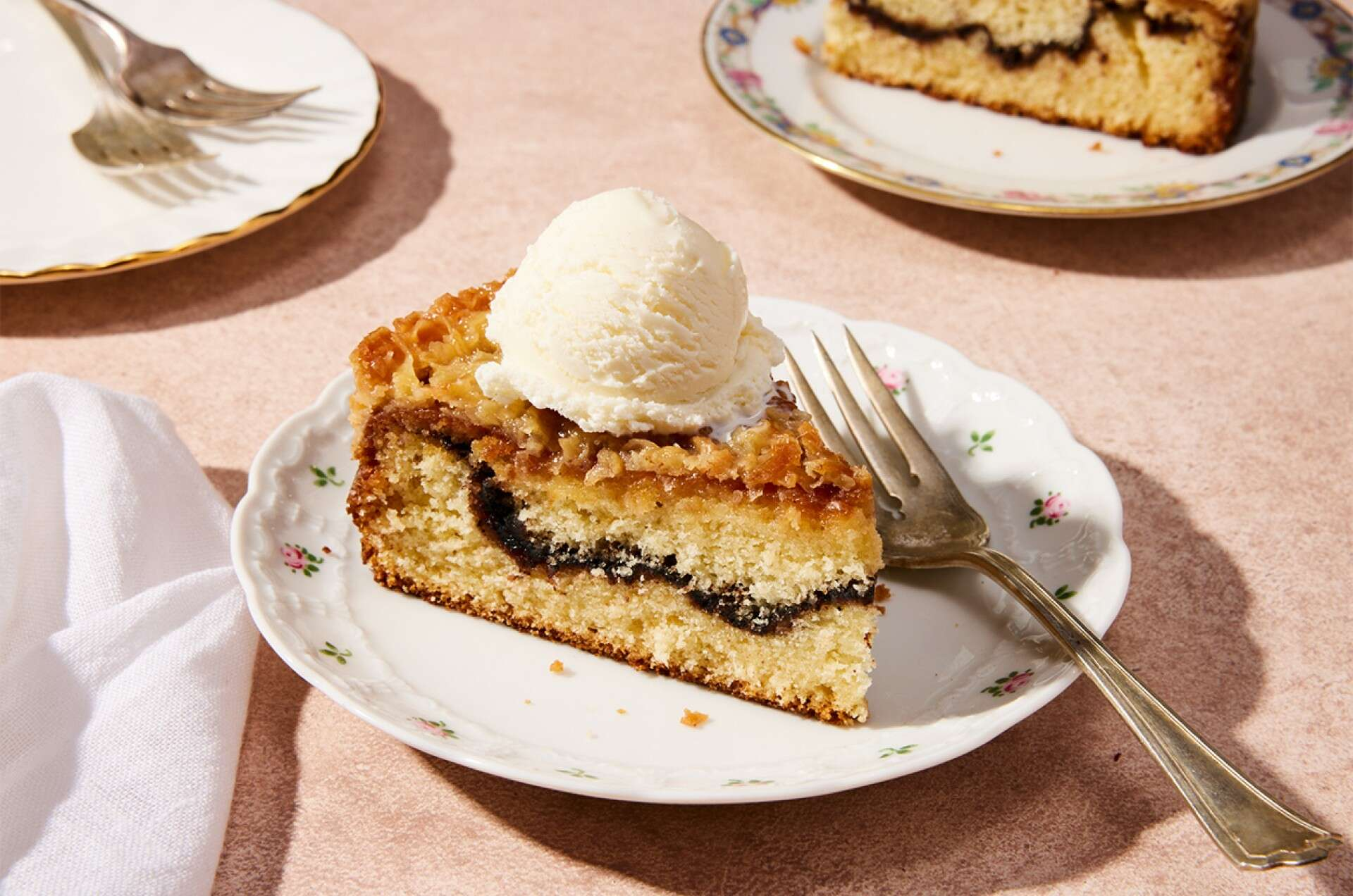
In Vermont the King Arthur test kitchen is still absolutely killing it. (See: Sarah Jampel's cake version of the Samoa Girl Scout cookie!) • In my nightmares, Republicans win the White House and Project 2025 is implemented. • But in Montana (and soon maybe Hawaii) young people are suing the government for their basic rights to live on a safe planet, and they're winning. • Here's a recipe for an enormous cookie to help you deal with all that.
Thank you as always to Sarah Freeman for her illustrations. Happy birthday to my younger sister Erin (today!) and my older sister Jen (this past Monday)! And to my parents who have been married now for 46 years: happy anniversary, babes.